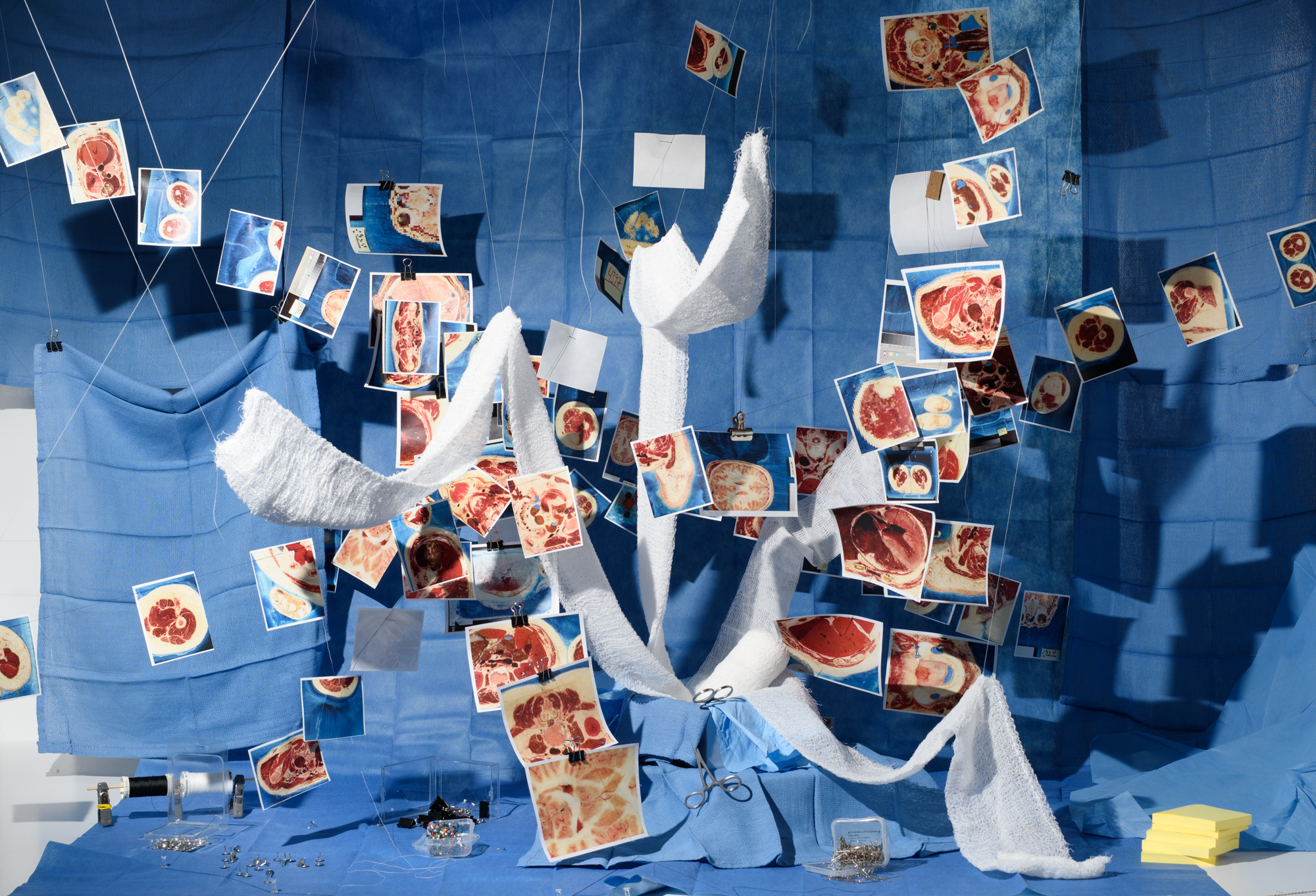
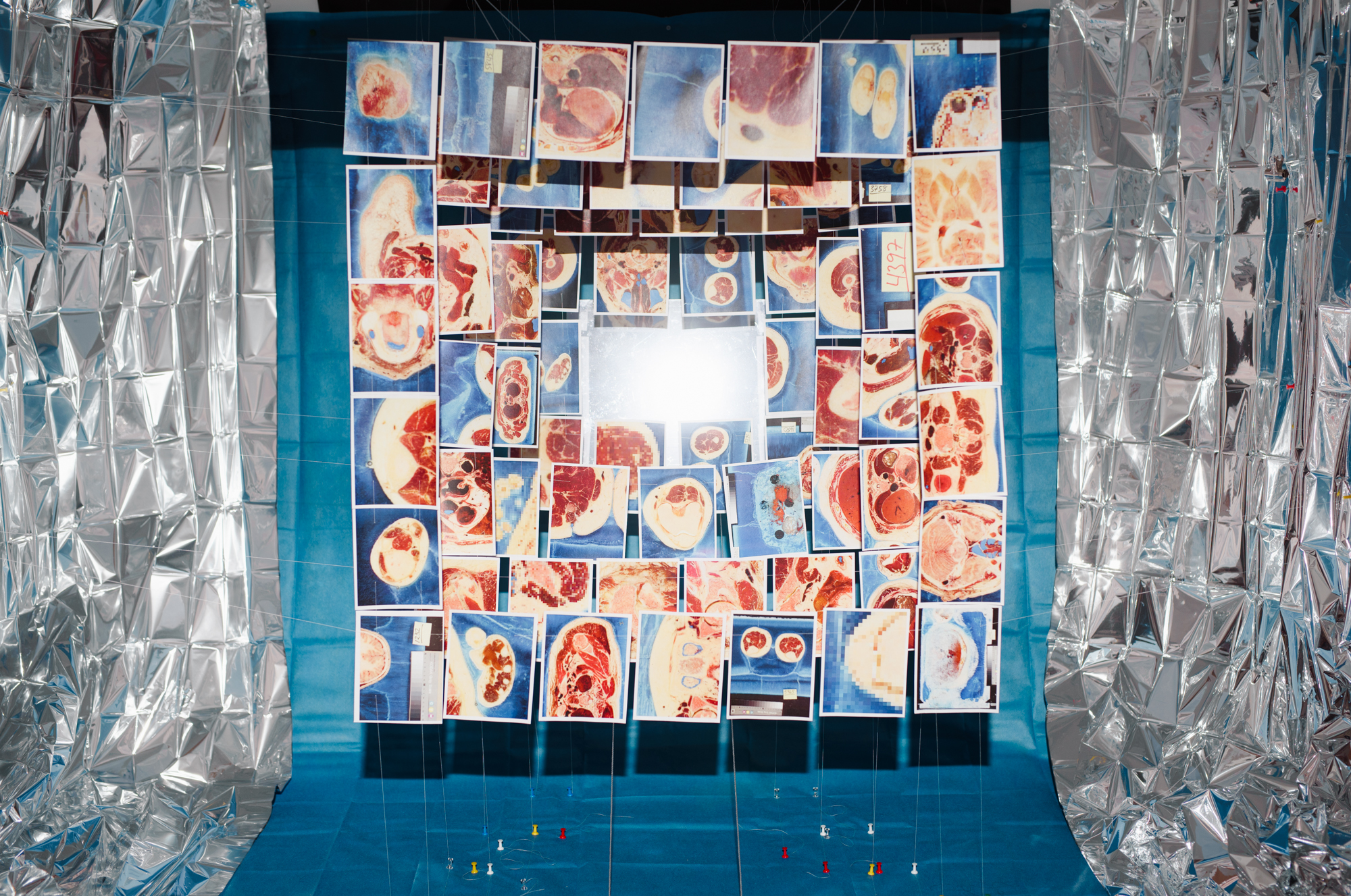
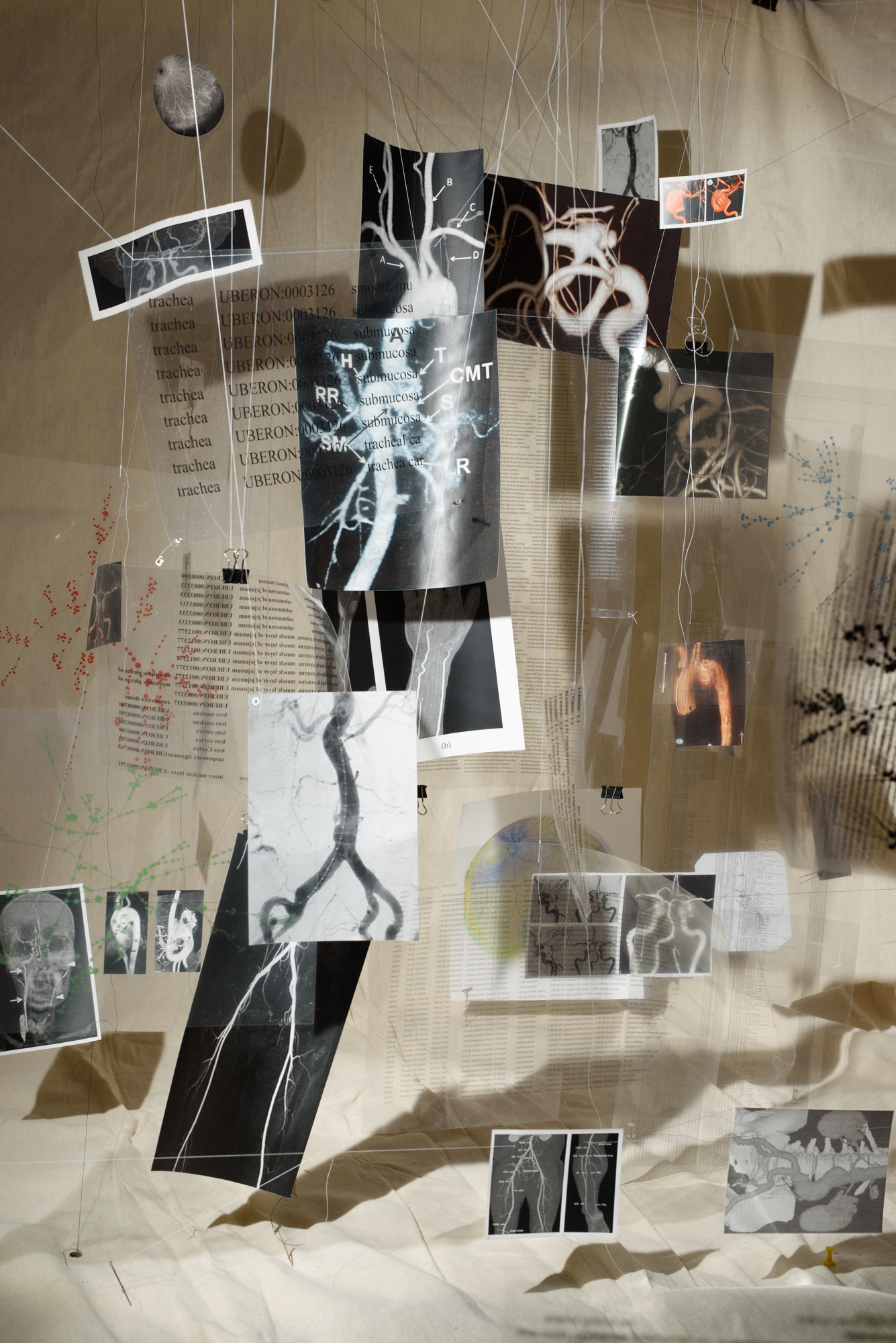
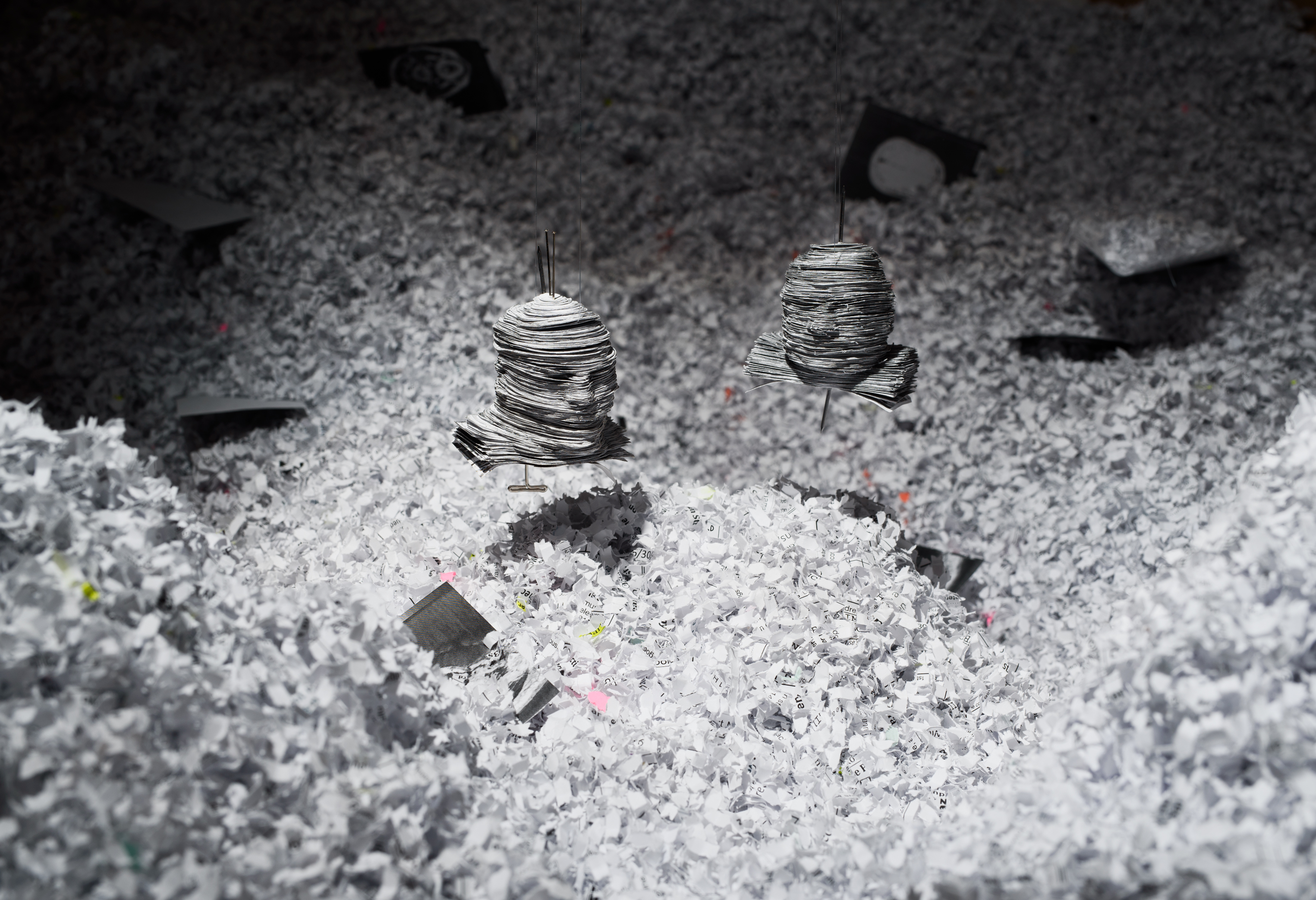
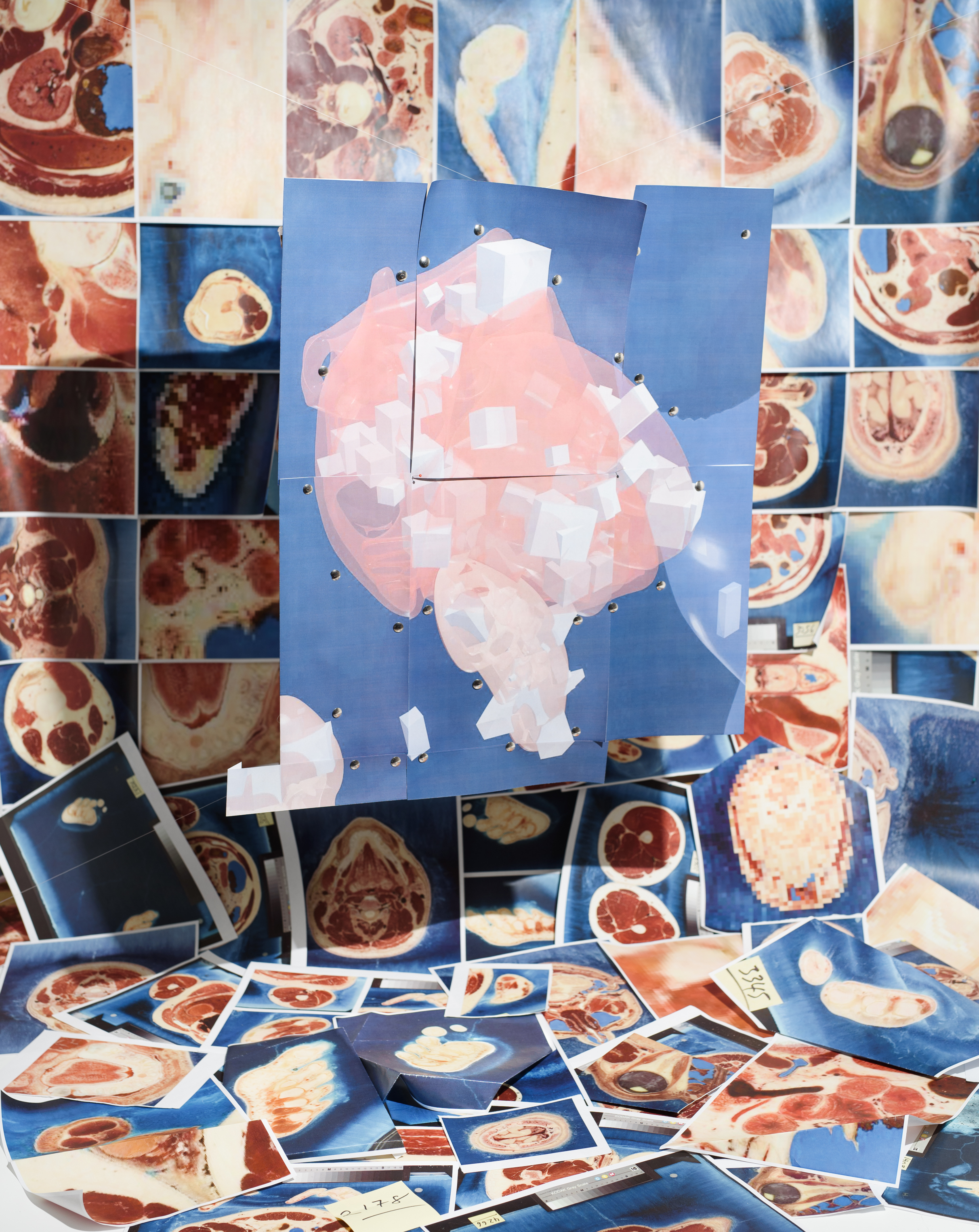
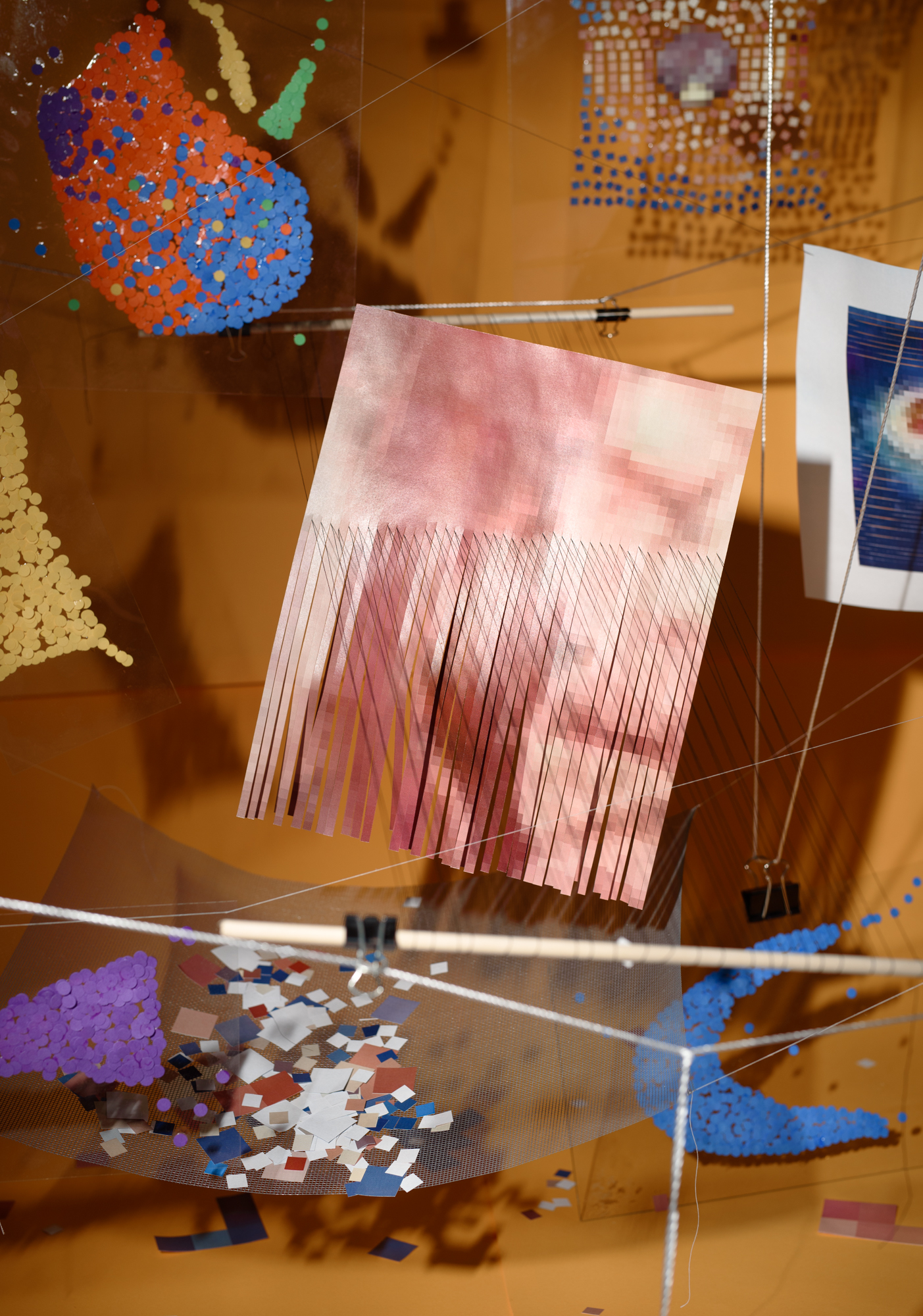
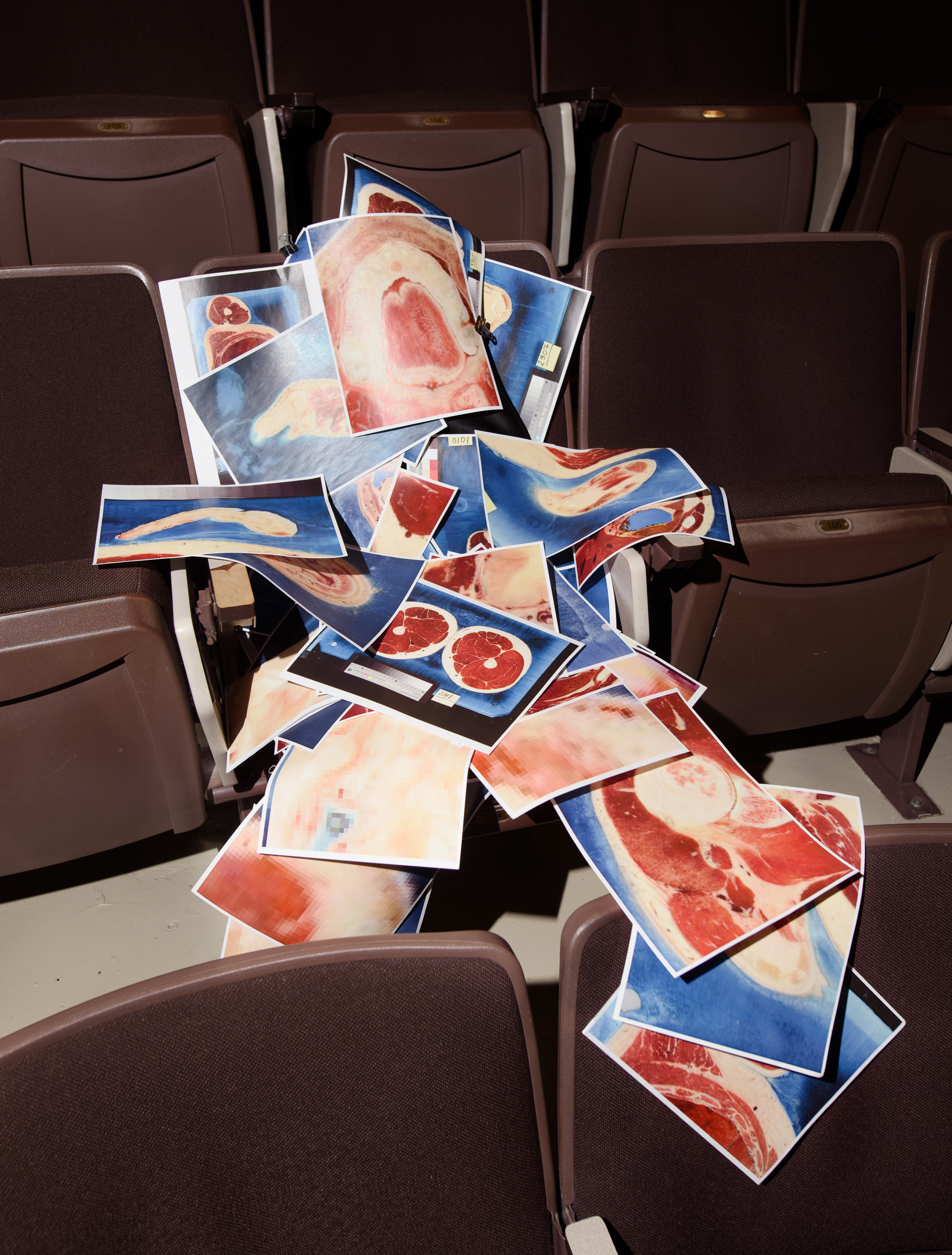
This is a series of photographs I constructed from images in the National Institute of Health's Visible Human datasets, which are full color cross-sectional photographs of two frozen cadavers made in the 1990s. They serve as the basis for early digital 3D models of the body, as well as cutting-edge modern research projects. To me, they raise urgent questions about how photography can extract knowledge from the medicalized human body. Do the images themselves – where it’s hard to identify specific body parts without special training – provide any human understanding, or is it reserved for the virtual world? What is the cost of this type of archive, the transmutation of the body into images, and the digital immortality that results from it? They seem to preempt contemporary concerns about the digital body, anonymity, and the overall strangeness of being intimately known by machines.
I make sculptures with these archival images, which I then photograph and disassemble shortly thereafter. They occupy the precarious boundary between meticulous recordkeeping and deliberate impermanence. I employ everyday materials – office, sewing, and craft supplies, construction materials, and medical supplies, often pulled together by a surgical slice or stich – to suspend printed, projected, and transparent photographs. There is no digital manipulation involved; everything is done practically in a modular studio that I built. I serve as dissector and anatomist, but also as re-assembler and reanimator, while trying to face these images in some unreal space between a human and machine gaze.